For the Workplace
Forgiveness
Letting go of grudges to restore my own well being
Forgiveness helps restore relationships and reduce tension in the workplace.
When people let go of grudges and choose to move forward, collaboration becomes easier and emotional energy is freed for productive work. Forgiveness builds a culture where mistakes become opportunities for growth rather than barriers.
Essay
How to Use Forgiveness to Improve Workplace Culture
By Jill Tomey
Letting go of grudges to restore my own well‑being — and the well‑being of the workplace.
Forgiveness is not a soft skill. It’s a culture skill. Across organizational psychology research, forgiveness consistently shows up as a powerful driver of trust, psychological safety, collaboration, and emotional well‑being. When employees and leaders let go of grudges, they reduce interpersonal tension and create conditions where people can work together with clarity instead of fear.
Below are five research‑supported practices that help organizations use forgiveness to strengthen workplace culture.
1 - Make it clear that mistakes are addressed but not weaponized or remembered as grudges. Healthy cultures don’t pretend mistakes don’t matter. They simply refuse to turn them into ammunition. Research shows that when employees know errors will be addressed fairly and without lingering resentment, trust increases and defensiveness decreases. What this looks like in practice:
Correct the issue, not the person’s identity.
Avoid bringing up past mistakes during new conflicts.
Reinforce forward movement: “We’ve addressed it — now let’s move ahead.”
2 - Encourage transparency about errors and learning from them. Forgiveness and transparency reinforce each other. When people know they won’t be punished with grudges, they are more willing to surface errors early — which is essential for innovation, safety, and continuous improvement. What this looks like in practice:
Normalize conversations about “what we learned” instead of “who slipped.”
Celebrate early error‑reporting as responsible behavior.
Use mistakes as team learning opportunities, not private shame.
3 - Train emotion‑regulation skills to prevent conflict from festering. Forgiveness is deeply connected to emotion regulation, the ability to manage anger and disappointment. Research shows that when employees can regulate their emotional responses, they can release resentment more easily and are less likely to carry conflict forward. What this looks like in practice:
Offer training on emotional triggers and self‑management.
Teach “pause practices” before responding in conflict.
Encourage reflection: “What story am I telling myself about this?”
4 - Create safe spaces for airing grievances and repairing harm. Forgiveness doesn’t mean ignoring hurt. It means addressing it in ways that lead to repair rather than retaliation. Research highlights the importance of structured, predictable spaces where employees can voice concerns, clarify intentions, and rebuild trust. What this looks like in practice:
Use facilitated conversations when tension is high.
Build rituals like retrospectives or “energy checks.”
Make repair a normal part of team functioning, not a rare event.
5 - Leaders must forgive consistently across team members, not selectively. Leadership consistency is one of the strongest predictors of a healthy forgiveness climate. Research shows that when leaders forgive some employees but hold grudges against others, trust collapses and perceptions of fairness erode. What this looks like in practice:
Respond to mistakes with the same process, regardless of who made them.
Avoid “scorekeeping” — tracking who has disappointed you.
Model emotional intelligence by acknowledging frustration but choosing repair.
Forgiveness isn’t soft — it’s strategic. It builds a workplace where people can show up fully, without fear of being defined by their worst moments. It’s a research‑supported approach to building cultures that are resilient, respectful, and deeply human.
How will you use Forgiveness to improve your workplace culture?
Works Cited
Brady, Daniel L., Maria Francisca Saldanha, and Laurie J. Barclay. “Conceptualizing Forgiveness: A Review and Path Forward.” Journal of Organizational Behavior 44, no. 8 (2023): 1253–1276. URL: https://onlinelibrary.wiley.com/doi/10.1002/job.2632
“Examining Motivational Profiles of Forgiveness in the Workplace: An Employee-Centered Approach.” Journal of Business Ethics (forthcoming). URL: https://link.springer.com/article/10.1007/s10551-xxxx-xxxx Accessible via title search on the Journal of Business Ethics site.)
Cao, Wenrui. Forgiveness in Work Relationships: Causes and Consequences. PhD diss., Utrecht University, 2022.
URL: https://dspace.library.uu.nl/handle/1874/423621
Cotton, Patti. “Forgiveness as a Leadership Culture: Restoring Energy Across Teams and Organizations.” Patti Cotton Leadership, December 2, 2025. URL: https://patticotton.com/forgiveness-as-a-leadership-culture-restoring-energy-across-teams-and-organizations
St. John, Claudia. “Forgiveness as a Leadership Superpower.” The Workplace Advisors, March 6, 2026.
URL: https://www.theworkplaceadvisors.com/forgiveness-as-a-leadership-superpower
Srivastava, Vaibhav. “The Courage to Let Go: Three Habits That Redefine Leadership.” Forbes (Forbes Business Council), January 15, 2026. URL: https://www.forbes.com/sites/forbesbusinesscouncil/2026/01/15/the-courage-to-let-go-three-habits-that-redefine-leadership
Affirmations for the Workplace
I am quick to release resentment to focus on productive solutions.
I apologize when needed to create a positive work environment.
I use forgiveness to better understand those I work with.
I choose peace and let go of the need to retaliate to stay focused on team goals.
I choose actions that reflect my character, not my hurt to support a healthy team culture.
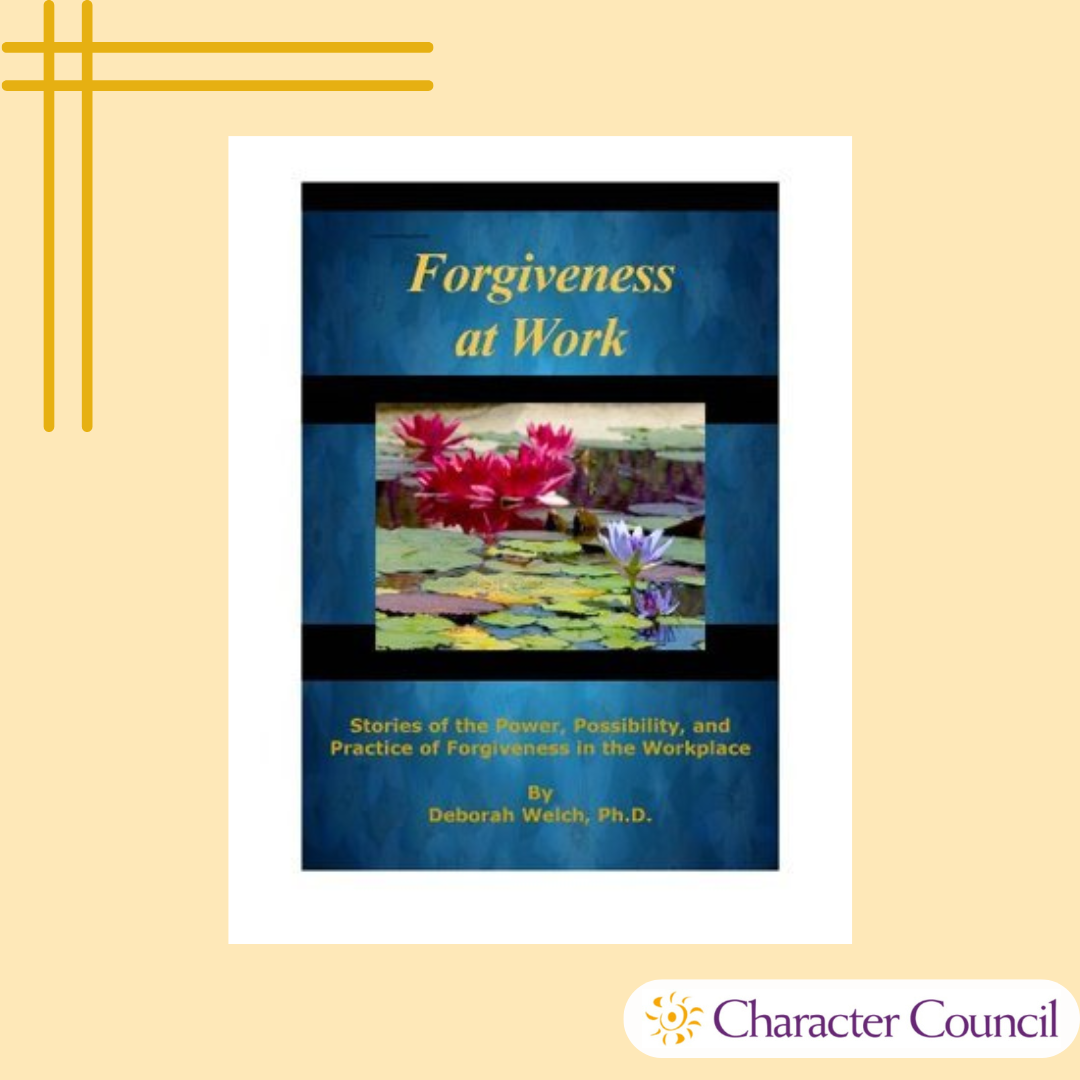
Forgiveness Resource Library
The Links below will take you to Resources you can use in the workplace to encourage the Character Quality of Forgiveness.




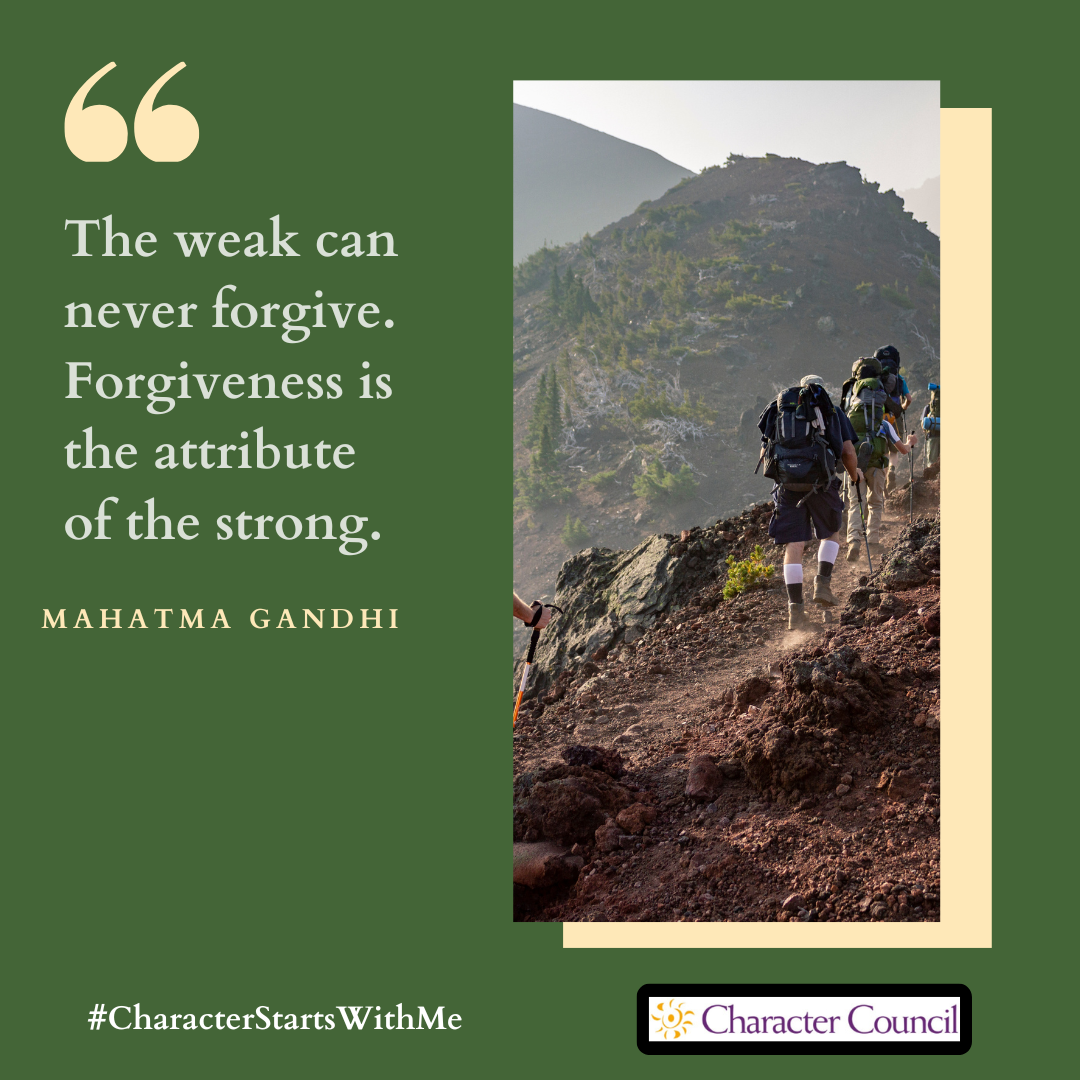
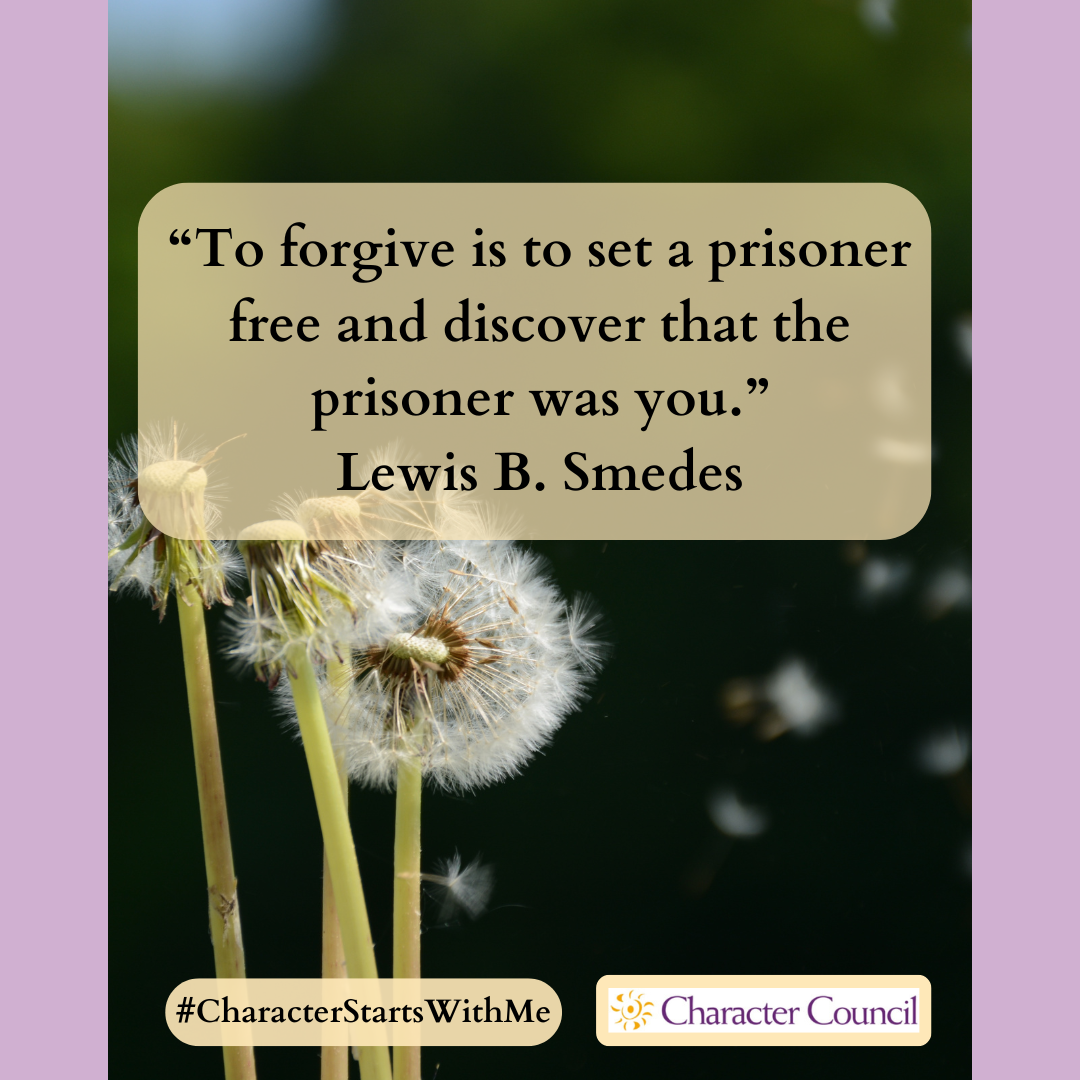
Forgiveness Quotes
Looking for reminders that Forgiveness makes a difference? Explore the full collection of Forgiveness Quotes and find the perfect line to share, post, or spark a conversation.